 Year-End Giving: The Paid Media Playbook for Your Biggest Fundraising Window" width="1200" height="675" fetchpriority="high">
Year-End Giving: The Paid Media Playbook for Your Biggest Fundraising Window
Year-end giving is won or lost in a few short weeks, and most nonprofits run paid media during those weeks without a plan built for them. December is the biggest month for charitable giving, and the final days before the tax-year deadline carry a huge share of it. By then, every inbox and feed is crowded with year-end appeals.
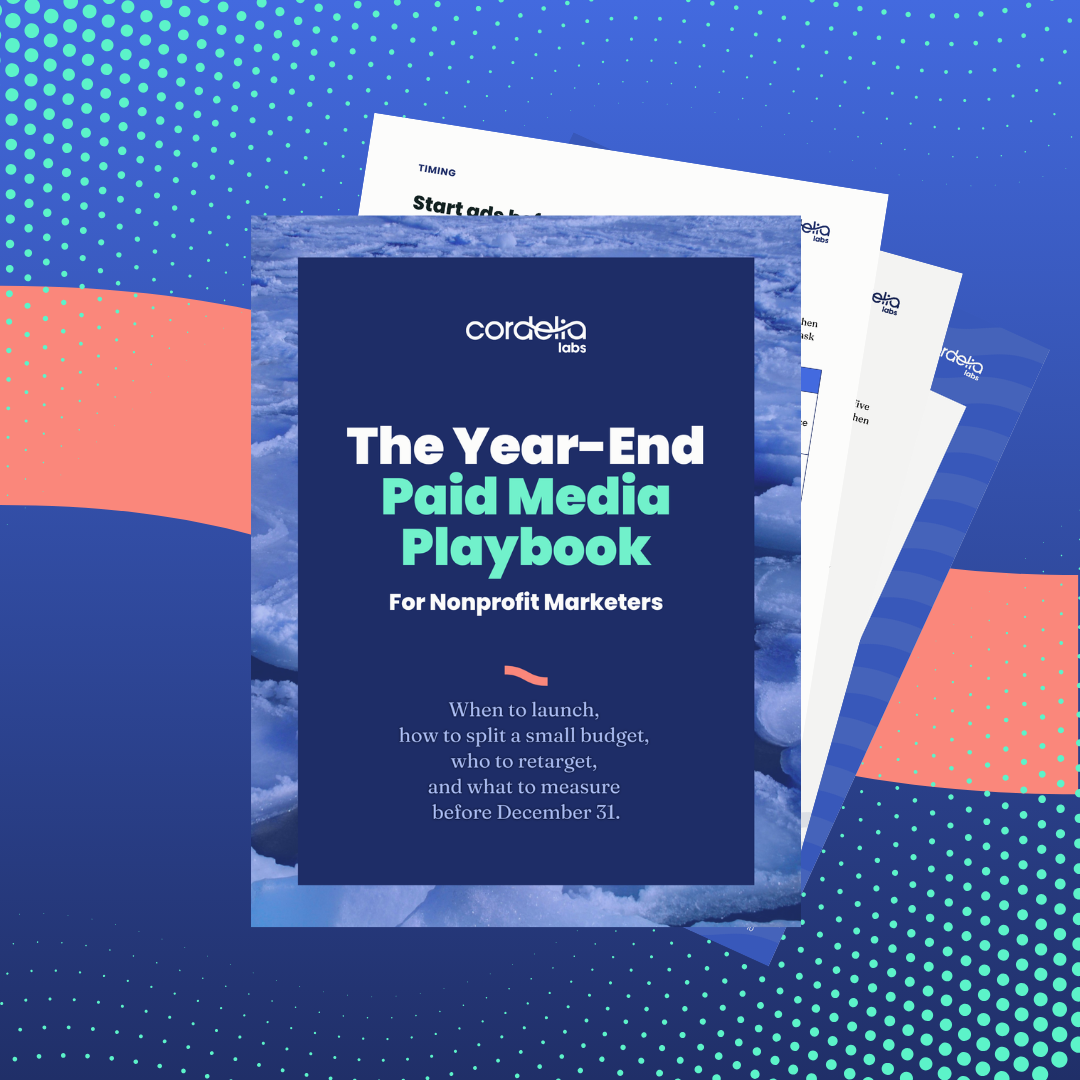
That’s exactly what our Paid Media Year-End Paid Media Playbook is built to fix. It lays out the whole system for your biggest giving window, including when to launch, how to split a lean budget, who to retarget, and what to measure. We’ll cover the highlights below, but if you want the complete plan, download the full playbook.

Year-End Giving Is Set Up in the Fall, Not in December
Paid ads work best when people have seen your organization several times before you ask them for money. The December ask depends on warm-up work you did weeks earlier. Christmas decorations in October might be tacky, but fall is absolutely the right time to lay the foundation for the giving season.
Here is your phased calendar at a glance:
- September to October: Set a goal and a budget, install and test donation tracking, upload your donor and email lists, and get creative approved before ad review slows down in late November.
- Early-to-mid November: Warm up. Run impact stories to people who already know you, with no ask. You are growing the audiences you will retarget in December.
- Giving Tuesday: Raise budgets on warm audiences and brand search. Match your email and organic social word for word.
- Mid-December: Hold steady at a lower spend.
- December 26 to 31: The final push, and the highest spend of the year. Keep ads running through 11:59 p.m. on December 31.
Reading this in November? Skip cold prospecting. Building an audience from scratch in four weeks costs too much. Put the money on brand search and on retargeting the people who already know you.
Fund Two Channels Well, Not Five Channels Weakly
A small budget goes further in two channels than in five. Split $3,000 across five channels and you get five weak tests and no answers. Fund them in order and stop when the money runs out.
- Brand Search: People searching your name in December are close to making a gift. Clicks are cheap, and other nonprofit organizations and donation platforms will bid on your name if you don't.
- Meta Retargeting: Past donors, lapsed donors, email subscribers, and website visitors already trust you, so they convert at the lowest cost.
- Cause Search: Terms like “donate to animal shelter” carry higher intent than social and higher cost than brand search.
- Social Prospecting: Use lookalike audiences from your donor list, but this is only worth it if the warm-up started in early November.
- Display: Use this for retargeting only because cold display rarely produces year-end gifts.
Our playbook has the actual budget-split percentages by tier. One rule holds no matter your split: hold back 30-40% of the total for December 26 to 31.
Your Warmest Audiences Already Know Your Name
For a year-end fundraising campaign, most of a small budget should go to people who have already interacted with you, because they convert at the lowest cost. Build these audiences in October so they are ready when you need them.
- Donors Who Haven’t Given This Year: Show what their last gift made possible, then ask them to renew.
- Lapsed Donors: Tell them what has changed since they gave and why this year matters.
- Email Subscribers Who Have Never Given: Share one clear story and a specific amount.
- Donation Page Visitors Who Didn’t Finish: Give them a short reminder and a direct link back to the form.
- Recent Website Visitors and Video Viewers: Share impact content in November and the ask in December.
Run three messages in sequence: the warm-up in November (stories, no ask), the ask on Giving Tuesday and into December (a specific amount, a match if you have one, and a clear call to action), and the deadline push from December 26 to 31 (days remaining and progress toward your fundraising goals).
Exclude anyone who gave in the last 30 days, and refresh that list weekly. Nothing sours a supporter faster than an ask the day after they gave.
Give Donors More Than One Way to Give
Your donation page is where paid media either pays off or leaks. Send every ad click straight to a giving page that matches the ad, never the homepage, and keep the donation forms short. Every extra click costs you a gift and lowers your conversion rate.
Show the ways to give that fit your donors. Include a one-time gift and a monthly giving option by default, since recurring giving turns a single December donor into a year-round supporter. For major donors and planned giving prospects, spell out the options that carry real tax savings: gifts of appreciated stock (which let a donor deduct the fair market value and skip capital gains), donor-advised funds, and matching gifts through an employer. A “give now” button handles the impulse gift. A short note on DAF and stock giving captures the larger ones.
Paid media drives the traffic. Your direct mail and peer-to-peer fundraising carry the same message offline, so match the language across all of them.
Measure Gifts, Not Clicks
Awareness campaigns succeed when people see you. Giving campaigns succeed when people give. Judge your year-end ads by the second standard.
Track these:
- Donations from Ads: How many gifts paid media produced
- Revenue from Ads: Total dollars raised from ad traffic
- Cost Per Donation: Your main efficiency number
- Return on Ad Spend: Above 1 means your ads raised more than they cost
- Donation Page Conversion Rate: A low number points to a page problem
- New Donors Acquired: Worth more than one gift if you keep them
Trust your donation platform or CRM over ad platforms, which count conversions differently and disagree. Compare the two every week and investigate any big gap. Warm-up metrics like video view rates help in November, but they don't tell you whether the campaign raised money.
No Budget? You Can Still Run Year-End Ads
A thin budget is not a reason to sit out the holiday season. Pick one or two of these:
- Use Google Ad Grants: Eligible nonprofits get up to $10,000 a month in free Google search ads. Apply early, since approval takes weeks, then point it at your campaign page and your brand and cause terms.
- Boost One Proven Post: Put $100 to $300 behind the year-end post that already performed organically.
- Retarget Your Donation Page Visitors: This is your smallest, highest-intent audience. Even $10 to $20 a day during the final stretch can recover gifts.
- Bid on Your Own Name: This is cheap, and it keeps other organizations out of your branded results.
- Ask a Sponsor to Fund the Ads: A board member or corporate partner who already offers matching gifts can cover ad spend too.
The 6 Mistakes That Cost Nonprofits Gifts Every December
- You launch December 26 with nothing set up. The platforms need time to learn, and holiday ad review runs slow.
- You send ad clicks to the homepage instead of the donation form.
- You ask people who just gave. Set exclusion lists and refresh them weekly.
- You spread a small budget across every channel instead of fully funding the first two.
- You judge ads by clicks and likes. A cheap click that never gives is worth nothing.
- You double budgets overnight or shut them off early. Raise spend in steps, and keep ads live through December 31.
Get the Full Paid Media Playbook
This is just a quick overview. The full playbook goes deeper on everything, with the complete calendar, budget-split tables for every budget tier, audience-build instructions, the measurement setup, and a 10-item checklist to work through before your final push.
FAQs
When Should I Send Year-End Giving Emails?
Follow the phased calendar. Warm up in November with impact stories and no ask, push hard on Giving Tuesday, hold steady through mid-December, then send your heaviest appeals from December 26 to 31. Match your email message to your ads and direct mail so a supporter sees one consistent story.
What Are the Tax Benefits of Year-End Charitable Donations?
Charitable donations made by December 31 generally count toward that tax year. Gifts of appreciated stock let donors claim fair market value and avoid capital gains, and donor-advised funds and planned giving offer their own advantages. Tax rules change and vary by donor, so point supporters to a tax professional rather than giving specific advice in your appeals.
How Should I Talk to Lapsed Donors in a Year-End Letter?
Lead with what has changed since they last gave and why this year matters. Name the impact their past gift made, then make the renewal ask specific. The same message works across your year-end appeals, whether it reaches them by email, direct mail, or a retargeted ad.
What Are Some Effective Strategies for Year-End Giving Appeals?
Start early, fund brand search and retargeting before anything else, and run three messages in sequence: warm-up stories, a specific ask, and a deadline push. Measure cost per donation, not clicks, and give donors more than one way to give.