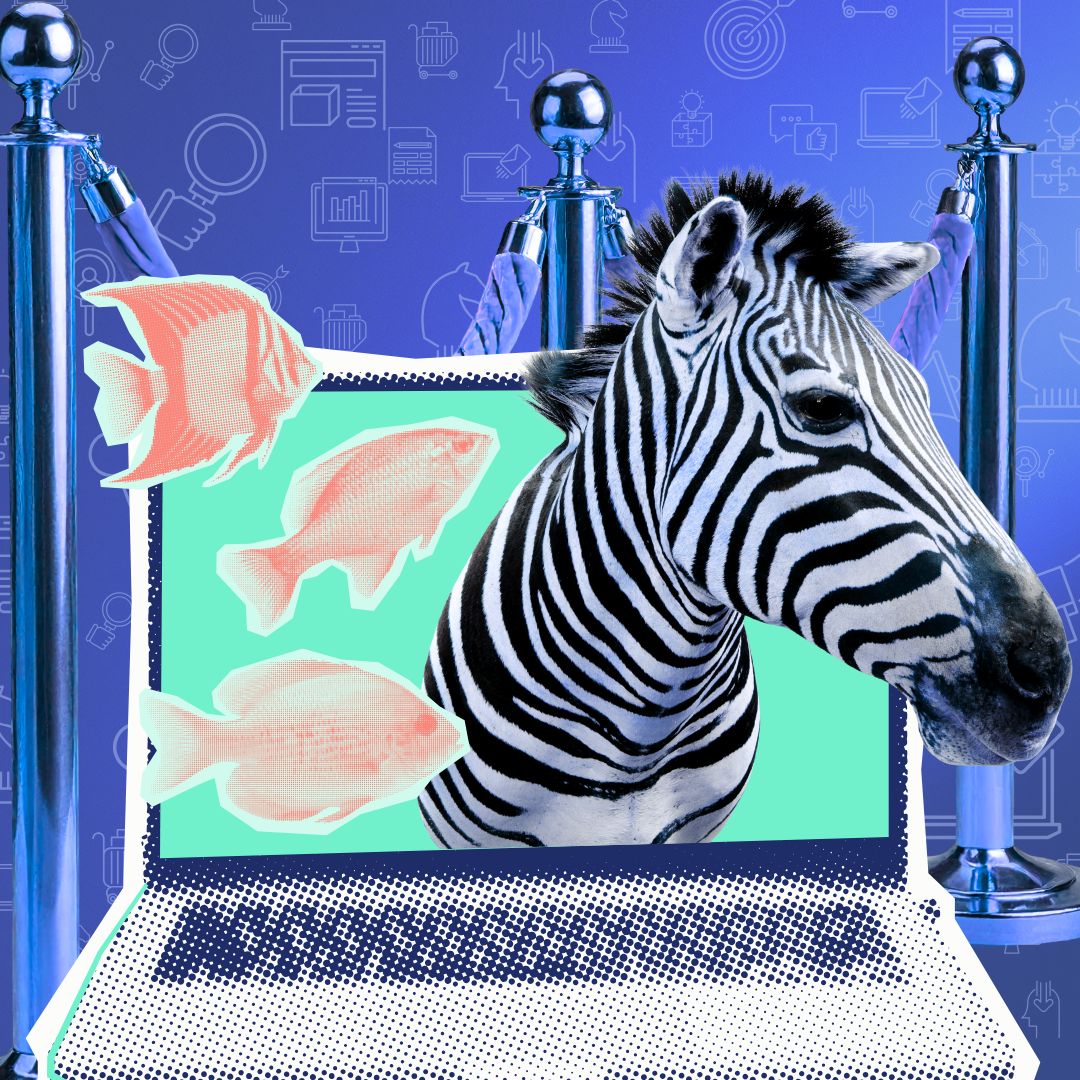
 How Zoos, Aquariums, and Museums Use Attraction Marketing to Build Membership and Drive Attendance" width="1200" height="675" fetchpriority="high">
Attendance at a zoo or aquarium spikes every June and drops every February. Membership targets don't take a season off, and that gap between the calendar and the board's expectations is the real paid media problem most cultural institutions face.
Attraction marketing is the answer, in two senses. It's the literal category (zoos, aquariums, and museums are attractions), and it's a strategy of building enough trust that visitors come to you instead of being chased down with untargeted ad spend.
This guide breaks that strategy into six phases, including the metrics that matter to a board, channel selection, creative, and reporting that ties a digital click to a scanned ticket.

What Is Attraction Marketing?
Attraction marketing is the discipline of building enough brand awareness and trust that the right visitors, members, and donors find the institution and stay. Paid media is the execution layer, accelerating a process that would otherwise unfold slowly through word of mouth and repeat visits.
The philosophy operates through four digital marketing channels that work together: search engine optimization (SEO) and its newer counterpart, answer engine optimization (AEO), social media marketing, content marketing, and digital advertising. A family planning a summer outing, a school administrator booking field trips, and a donor weighing a membership upgrade each need a different message through a different channel. That only works once the institution knows exactly who those people are before it writes a single ad.
Why Does Attraction Marketing Matter?
Seasonal attendance creates a trap. Summer spikes and holiday surges make it tempting to treat paid media as a short-term lever, switched on before a big weekend and off after. Membership growth doesn't run on that timeline.
A family that joins in June started down that path months earlier: a social follow in February, a website search in March, an email open in April, and a visit in May. A strategy that only credits the final click overlooks what led to the decision. Cultural institutions need a steady, year-round pipeline to generate leads.
Phase 1: The KPIs That Connect Paid Media to Real Outcomes
Metric 1: ROAS vs. CPA
Ad platforms surface return on ad spend (ROAS) first, so most institutions report it as their first metric. That's usually the wrong number for membership acquisition. ROAS measures revenue per ad dollar in the moment. CPA measures cost per conversion, and a single membership pays out over multiple years rather than in a single transaction.
A museum that spends $45 to acquire a member, given a $350 annual membership value, has a strong story to tell its board. A raw click-through rate doesn't, and reframing which numbers matter is part of what a paid media partner should bring to the table.
Metric 2: Geo-Fencing Conversion Rates
Geo-fencing draws a digital boundary around a competitor's parking lot, a school district, or a shopping corridor and serves ads to devices that cross it. For a cultural institution, that solves one of the hardest measurement problems in the category: connecting a digital impression to a physical visit.
A geo-fenced digital out-of-home (DOOH) or mobile ad that reaches someone within a mile of the institution, followed by a tracked visit, is a real attribution signal. Setting these up takes coordination on radius size and dwell time. This metric gives stakeholders digital spend tied to a gate admission, rather than just an impression count.
Metric 3: Membership Upsell Velocity
Membership upsell velocity measures how fast a first-time ticket buyer converts to a member. An institution converting 8% of first-time visitors within 90 days runs a fundamentally different paid media program than one converting 2%.
Paid media's job here is retargeting, email sequencing, and follow-up creative aimed at that window. Awareness fills the top of the funnel, and upsell velocity measures how well it closes.
Phase 2: Audience Segmentation and Data Hygiene
Identifying High-Value Visitor Profiles
Six visitor segments show up across nearly every cultural institution: families with young children, school groups and educators, residents and existing members, tourists, corporate partners, and donors. Each converts on a different path and responds to different creative.
A buyer persona turns the audience "families" into something more usable. It explains who makes the decision, what they care about, and where they spend attention online. Attraction marketing only works at the channel level once that persona is specific.
First-Party Data in a Shifting Privacy Landscape
The cultural institution's own ticket buyers, past members, event registrants, and email subscribers are the highest-value targeting asset available, and most institutions underuse it. This audience already opted in.
Building that email list should be a standing priority. Create landing pages with testimonials, lead magnets, educator resources and how-to guides, free tools, event sign-up forms, and visitor surveys. An institution that owns its target audience data holds up better than one that rents it from Meta or Google.
Phase 3: Channel Selection and Budget Allocation
Search Engine Marketing
Paid search captures people already looking. Someone searching "zoo membership near me" has high intent and a short path to conversion, and for most institutions, budget should go here first.
Paid and organic search inform each other. Keywords that perform well in paid campaigns point to what's worth building into quality content, whether it's an educator's guide, an infographic, or a how-to post that ranks on its own over time.
AI search results are changing that math. A parent asking Google's AI Overview or ChatGPT "best zoo membership near me" often gets a full answer with no click at all. Membership pages, pricing, and hours need to be structured so an AI model can pull them correctly, since visibility without a click still counts. As platforms test ad placements inside AI-generated answers, paid search budgets should plan for that layer alongside the traditional result.
Branded search is constantly skipped, and it shouldn't be. Protecting the institution's own name from competitor conquest bidding costs little and closes an easy leak.
Paid Social
Cultural institutions often have their strongest organic engagement on social, and amplifying content that's already working outperforms cold creative built from scratch.
TikTok has become a real channel for behind-the-scenes footage, animal moments, and educator storytelling. The audience skews young, which matters for a pipeline measured in years, not months. LinkedIn is worth testing for corporate membership programs and school district partnerships.
Influencer partnerships don't need a national account. A local parenting or education creator with an engaged following converts better than broad-reach accounts, and their user-generated content gets repurposed across the rest of the mix. Real visitor footage and real mission stories still outperform polished, generic creative here.
Programmatic Advertising
Programmatic keeps the institution visible during a long consideration period and works well for retargeting site visitors who haven't converted yet. It isn't the primary conversion channel, but it reinforces the awareness search and social already built. Display is one execution channel here, alongside DOOH and digital radio. DOOH placements near schools, transit corridors, and grocery stores put the institution in front of families during their actual routines. Digital radio and streaming audio reach parents during commutes and school pickup, a moment display ads never touch.
Phase 4: Creative Strategy and Asset Development
Using Urgency, Value, and Mission
Three messaging layers map to three funnel stages.
- Urgency ("this exhibition closes in six weeks") works on people already considering a visit.
- Value ("membership pays for itself in two visits") works on people comparing options.
- Mission ("your membership funds conservation directly") works on cold audiences, building an emotional connection for the first time.
A retargeting ad for someone who's visited the membership page twice should carry urgency, not a cold prospecting ad meant to build trust first. Educational content, podcasts, and webinars build that trust layer underneath the ads.
Using Dynamic Creative Optimization
Dynamic creative optimization automatically serves different headlines, images, and calls to action to different segments, so a family-targeted ad and an educator-targeted ad for the same exhibition can run from a single campaign structure instead of two separate builds.
Using AI-Generated Creative
AI tools speed up production, but accuracy and brand safety aren't optional here. Human review belongs at every stage, since a factually wrong conservation claim or an insensitive image becomes a brand loyalty problem no optimization setting can undo.
Phase 5: Implementation and Campaign Launch
Setting Up Multi-Touch Attribution
The path from first ad exposure to membership purchase rarely runs through one click. Single-touch attribution undercounts nearly every channel in that sequence. Getting it right takes UTM parameters on everything and a link between digital touchpoints, CRM records, and gate admissions.
Managing High-Volume Campaign Surges
A flash sale, a membership drive, or a major exhibition launch creates traffic spikes that expose technical gaps fast. A landing page converting at 4% under normal load might convert at 1% once it's slow under a surge. Coordinate with the web team before launch, set traffic thresholds that trigger alerts, and have a backup plan ready for form failures during the highest-traffic window.
Phase 6: Reporting, Accountability, and Real-World Outcomes
Digital Clicks vs. Gate Admissions
This is the hardest reporting problem in the category. Digital campaigns produce clicks and form fills. The institution measures success in visitors and memberships. Connecting those two data sets is what makes a report credible in front of a board or donor committee, through ticket scan data matched to campaign windows, membership activation dates compared to ad exposure, and CRM records linked to paid media source fields.
Where to Cut and Where to Double Down
For a constrained budget, the priority order runs paid search first, email marketing and retargeting second, and programmatic display third, once the first two are working. Broad awareness spend earns a spot only after the conversion foundation holds up.
Frame budget conversations for the board around cost per acquired membership and member lifetime value, not impressions or click-through rate.
The Paid Media Foundation Drives the Membership Model
Growing membership year-round means treating paid media as a running system, not a switch flipped on before summer and off after Labor Day. The six phases above connect strategy to execution to measurement, each one feeding the next.
Need help with attraction marketing? Cordelia Labs can work within your constrained budgets, board accountability, and multi-channel media while staying aligned with your mission.
FAQs
What Is an Example of Attraction Marketing for a Cultural Institution?
A zoo running a spring campaign that pairs geo-fenced mobile ads near local schools with a retargeting sequence aimed at past ticket buyers is a working example. The geo-fenced ads reach families in the right neighborhoods, and the retargeting sequence moves people who already visited toward a membership upgrade. Both run off the same first-party data and report to the same CPA target.
How Does Attraction Marketing Work in Paid Media?
It works by matching the message to where someone sits in the decision. Search captures people already looking, social builds on content that's already resonating, and programmatic and DOOH keep the institution visible during a long consideration window. Each channel plays a specific role instead of running the same generic ad everywhere.
Do I Need Influencers to Make Attraction Marketing Work?
No. Influencer marketing helps, particularly local family and education creators, but they're one input among several. An institution with strong first-party data, disciplined search and retargeting, and a clear KPI framework can run attraction marketing effectively without any influencer program at all.
Continue reading
-

CTV vs. DOOH: Which Emerging Channel Fits Your Organization's Budget?
-

Google Ad Grants vs. paid search: what the free $10,000 covers and where it stops
-
You have a $10,000 grant. You're spending $300 of it.
-

Google Ad Grants eligibility: who qualifies and how to get approved
-
Meta ads updates: what changed in 2026 and what it means for your campaigns